What is Peyronie’s disease?
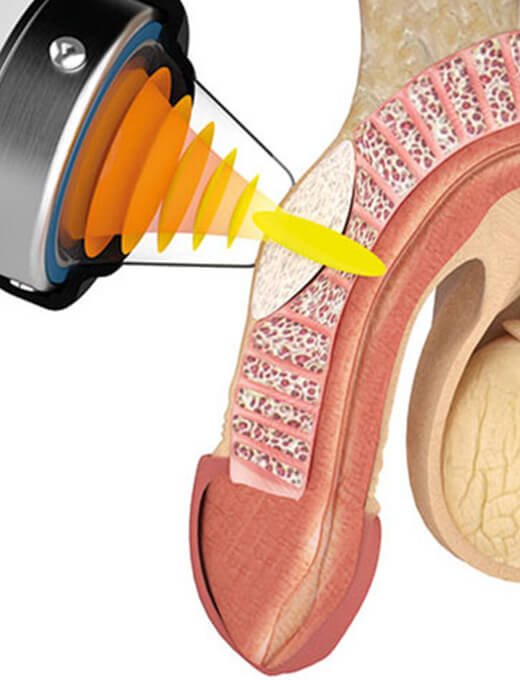
Peyronie’s Disease is a condition characterised by the development of fibrous scar tissue, or plaque, within the penis. This results in the formation of a curvature or deformity, making sexual intercourse difficult and in some more severe cases impossible, often causing pain or discomfort.
Peyronie’s Disease was named after François de la Peyronie, a French surgeon who first described the condition in 1743. He observed cases of penile curvature and fibrous plaque formation alikened to a string of rosary beads along the side or top of the penis shaft. Since then, Peyronie’s Disease has been extensively studied and researched, leading to advancements in its diagnosis and treatment options.
The exact cause of Peyronie’s Disease is still not fully understood, but it is believed to be related to trauma or injury to the penis, genetic factors, and certain health conditions.
Peyronie’s disease occurs in two distinct stages. The initial stage, known as the acute or active phase, typically spans a duration of 12 to 18 months. During this stage, significant changes to the penis take place, signifying the progression of the disease.
Following the active phase is the chronic or stable stage of Peyronie’s disease, where the disease’s progression comes to a halt. This phase is characterized by a cessation of further changes to the penis.
Peyronie’s disease is also referred to as Induratio Penis Plastica and, more recently, as Chronic Inflammation of Tunica Albuginea (CITA). It is occasionally known as Bent Nail Syndrome. It’s crucial to note that Peyronie’s disease is not contagious and cannot be transmitted to others.
A Common Condition Affecting Men’s Health.
Peyronie’s Disease is a prevalent condition that impacts approximately 4 out of 100 men between the ages of 40 and 70. While it is more commonly observed in men over 30, it can also manifest in younger individuals.
This condition occurs when fibrous scar tissue, known as a plaque, develops beneath the skin of the penis. These plaques prevent the penile tissue from expanding proportionately and equally on both sides, as a result he penis to bends abnormally during erections. While many men with Peyronie’s Disease can still engage in sexual intercourse, others may experience significant pain and erectile dysfunction as a result.